 German
 French

Can I leave money or property for pets in a Swiss will?
Learn how to provide for pets in a Swiss will through a legally binding care obligation (Auflage) and specific legacy under Article 482 SCC.

Drafting a will is the most important step in estate planning. Use our attorney-designed template to dictate exactly how your assets should be handled under Swiss law.
Download Instructions



Tailored to comply with Swiss inheritance laws and regulations.

Get your instructions in PDF format immediately after completion.

Written in plain English, avoiding confusing legal jargon.
Drafting a Last Will and Testament is the single most important step you can take to protect your family's future and ensure your final wishes are respected.
In Switzerland, if you pass away without a valid will, your estate is automatically distributed according to statutory succession laws. This means the government dictates exactly who inherits your assets, which often does not align with your personal wishes. By creating a legally binding will, you take back control.
Save CHF 100 compared to hiring a traditional lawyer.
Just 39 CHF
Download Instructions


Under Swiss inheritance law, certain family members (like your spouse and children) are entitled to a "compulsory portion" of your estate. However, beyond these strict legal minimums, you have the freedom to distribute the rest of your assets (the "freely disposable portion") exactly as you see fit.
A Last Will and Testament allows you to:
To write a legally valid will in Switzerland, you must be at least 18 years old and capable of discernment (of sound mind) at the time of writing it.
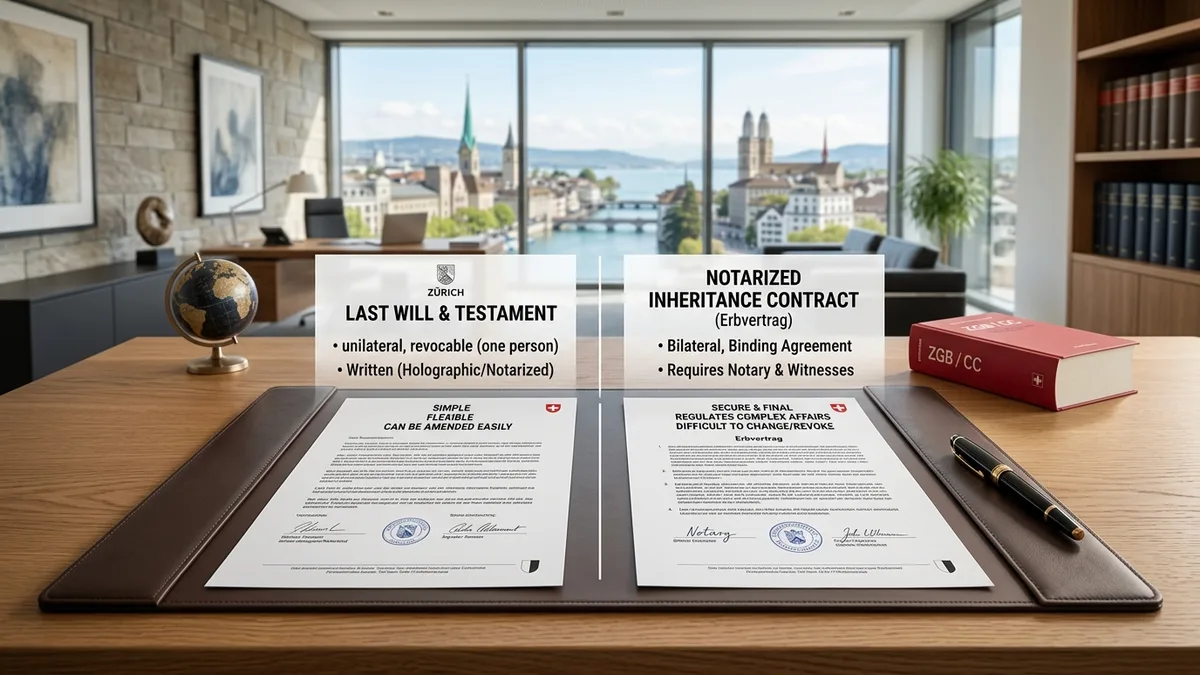
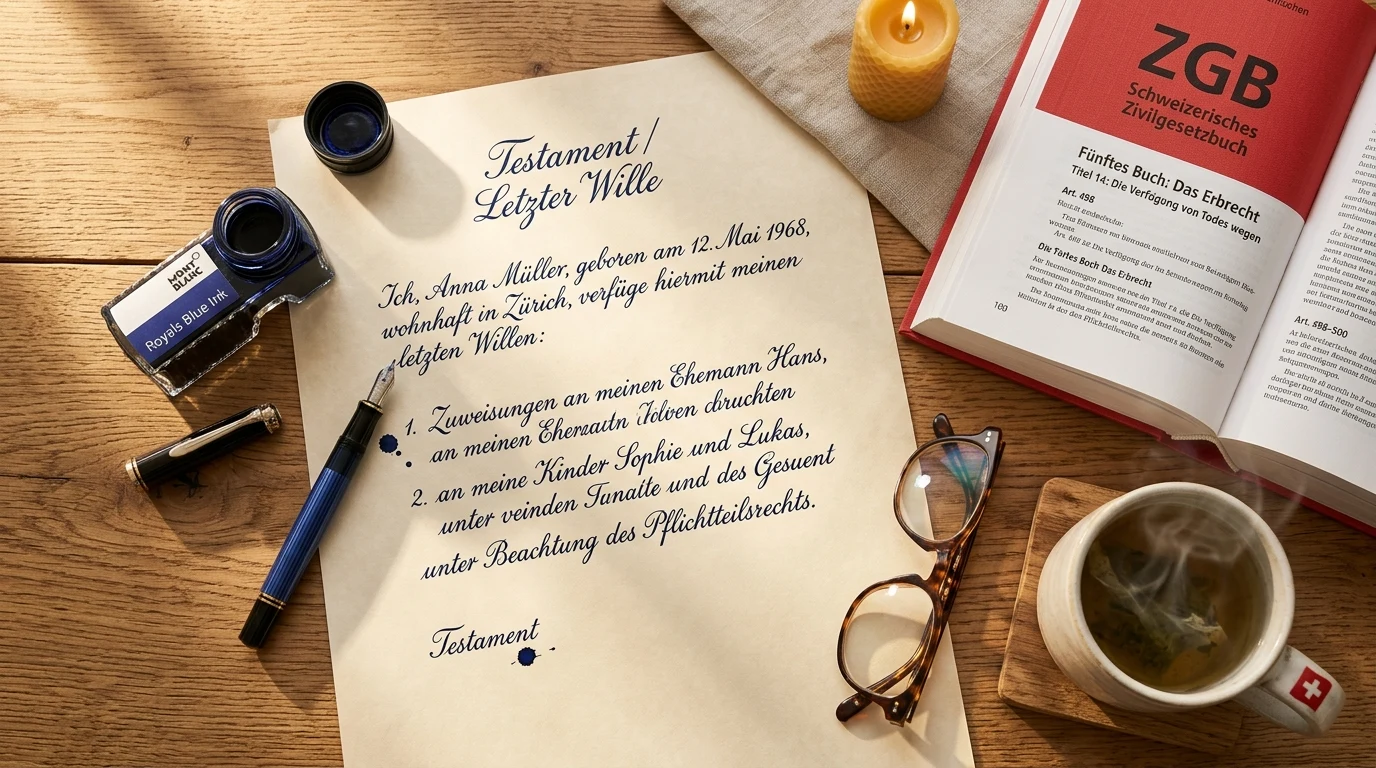
Please be aware that simply printing out a typed document and signing it is not legally valid in Switzerland unless it is notarized. To create a valid "Holographic Will" (Eigenhändiges Testament) for free, Swiss law (Art. 505 ZGB) strictly requires that the entire document must be written by hand. You must use our template as a guide, and copy the text word-for-word onto a blank piece of paper using your own handwriting. You must also include the exact date (day, month, year) and your signature by hand.
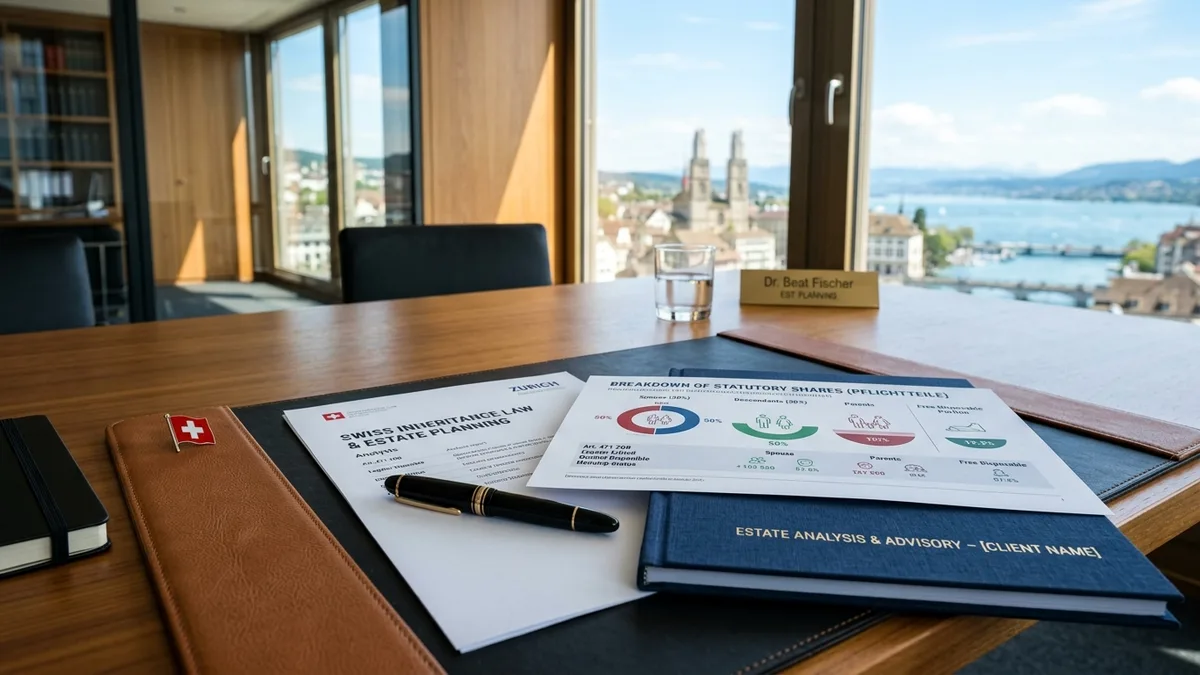
Swiss law does not give you complete freedom to distribute your estate however you like. Certain close family members are legally protected and entitled to a minimum share, no matter what your will says. On 1 January 2023, Switzerland significantly reformed these rules — the biggest change to Swiss inheritance law in over a century — giving testators considerably more freedom than before. If you've seen an older guide or template, it may still reflect the outdated pre-2023 figures.
Since the reform, the following applies:
A worked example: Say you're married with two children. Under normal statutory succession, your spouse would receive half your estate and your two children would split the other half between them. Applying the forced-share rules, your spouse's protected minimum works out to a quarter of your estate, and each child's protected minimum works out to an eighth. That leaves half of your entire estate as your freely disposable portion — money and assets you can leave to anyone you choose: a charity, a friend, an unmarried partner, or simply additional shares to your spouse or children.
The exact numbers depend on which family members survive you and, if you're married, on your matrimonial property regime, which is settled before the inheritance itself is calculated. If your situation isn't a straightforward single-marriage case with only shared children, it's worth having a notary confirm the figures before you finalise your will.
You can change or revoke your will at any time. To revoke it, you can physically destroy the document (e.g., by tearing it up) or write a new will that explicitly states it revokes and replaces all previous testamentary dispositions.
A perfectly valid will is worthless if nobody can find it after you're gone. Switzerland doesn't legally require you to register your will, but it's strongly recommended.
Secure yourself legally during your lifetime as well, by creating an Advance Healthcare Directive in addition to your Last Will.
Save CHF 100 compared to hiring a traditional lawyer.
Just 39 CHF
Download Instructions
Secure your family and avoid legal disputes.
Choose someone you trust to manage your estate.
Ensure your final wishes are legally documented.
I had been putting off writing my will for years because I thought it would be too complicated and expensive. This template made the whole process incredibly straightforward. The instructions on how to handwrite it for Swiss law were very clear. Highly recommended!
Exactly what I was looking for. The template is written in plain English, completely avoiding confusing legal jargon. It gave me a great structure to follow, and now I have total peace of mind knowing my family is protected.
A very solid and reliable template. It covered everything I needed regarding my assets and appointing an executor. I knocked off one star just because copying the whole thing by hand took a little while, but I understand that's a strict Swiss legal requirement, not the website's fault!
Fantastic resource! As an expat living in Switzerland, I was very confused about how local inheritance laws worked. The information provided alongside the template clarified exactly what I needed to do to make sure my final wishes are legally binding here.
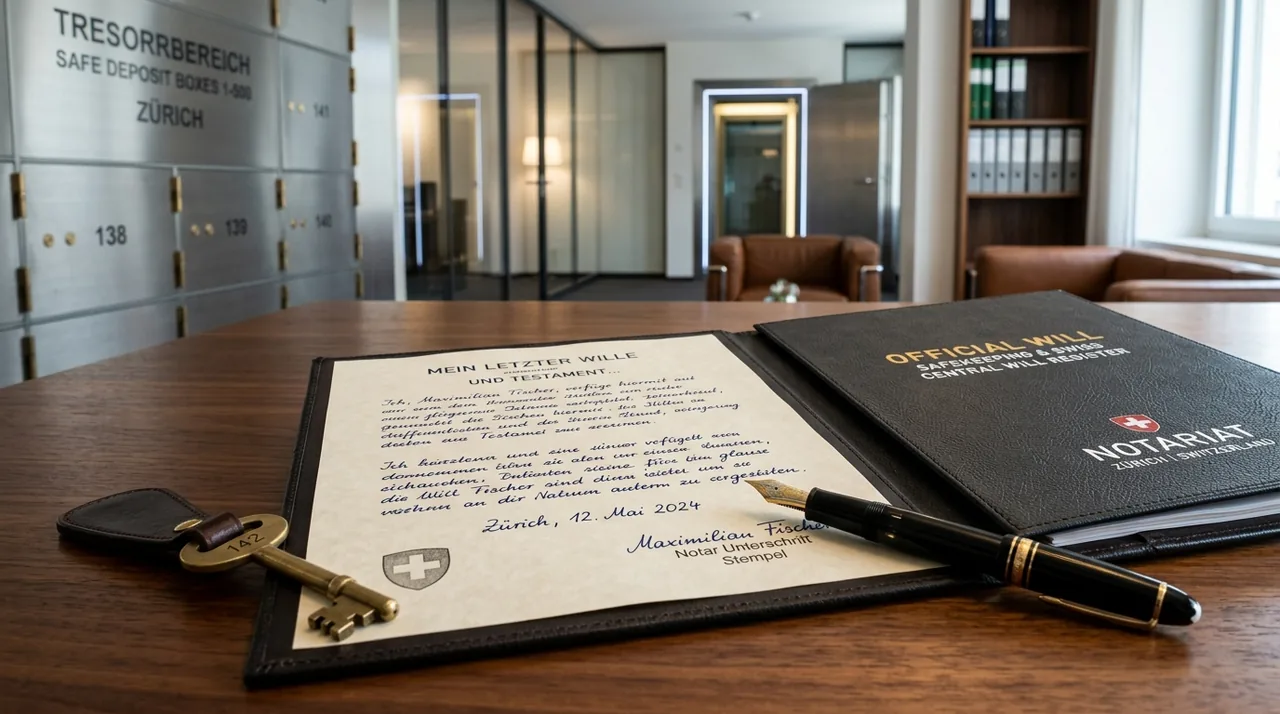
Where should you safely store and register a last will in Switzerland? Learn about official cantonal safekeeping, notary deposit, the Swiss Central Will Register, and why keeping a will in a bank safe deposit box can cause severe probate delays.
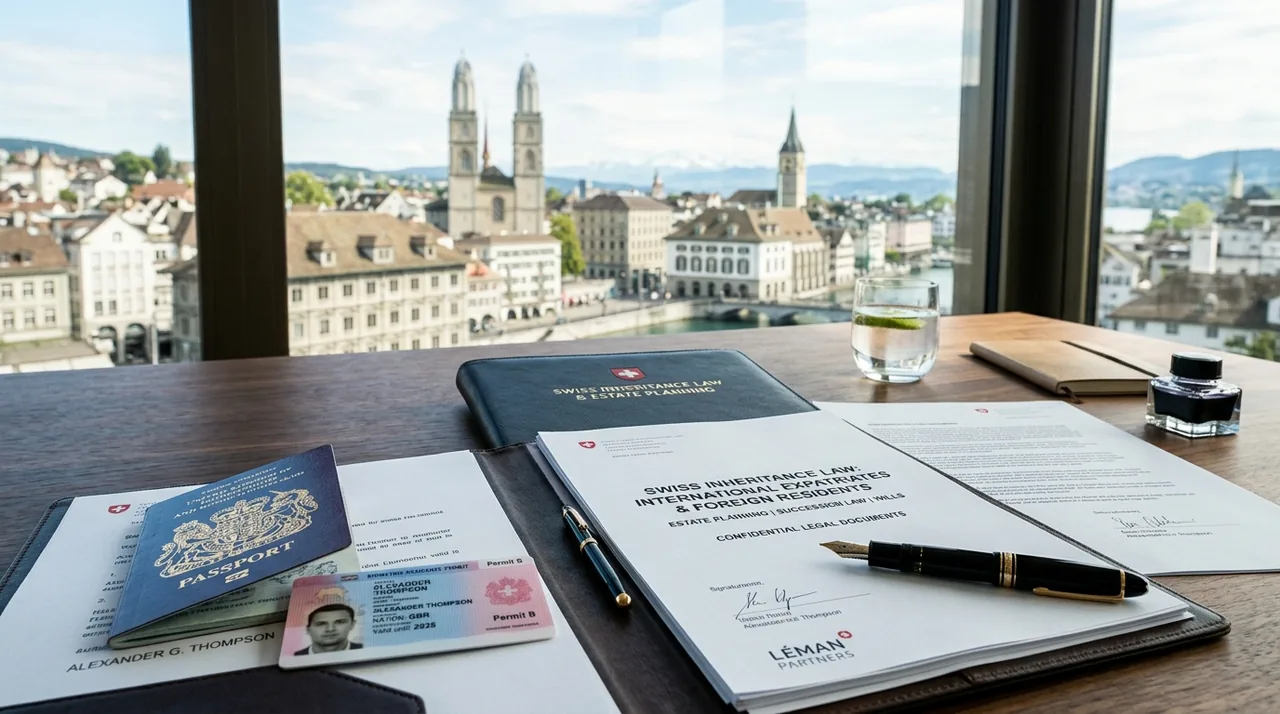
What happens if an expat or foreign resident dies in Switzerland without a will? Understand Swiss intestate succession rules, the Parentela hierarchy, statutory shares for spouses and children, and how to avoid estate freezes.

Drafting a will with a notary in Switzerland typically costs between 600 and 2,500 CHF. Costs vary significantly across cantons and hourly legal rates. Learn the complete cost structure and how writing a holographic will can save you over 90% in estate planning fees.

In Switzerland, a notary is not required to create a legally binding last will and testament. Under Article 505 of the Swiss Civil Code (ZGB), a handwritten holographic will is 100% valid and holds the exact same legal power as an expensive notarial deed.
No need to pay expensive lawyer fees. Download our comprehensive instructions and legally-vetted text to confidently handwrite your document at your own pace—all from the comfort of your home.
Loading...